Skip to content
Subscription commerceWeb platform

Zone Healthy

The storefront was never the hard part: four independent rules all had to resolve into one cart before a customer could be shown a price.

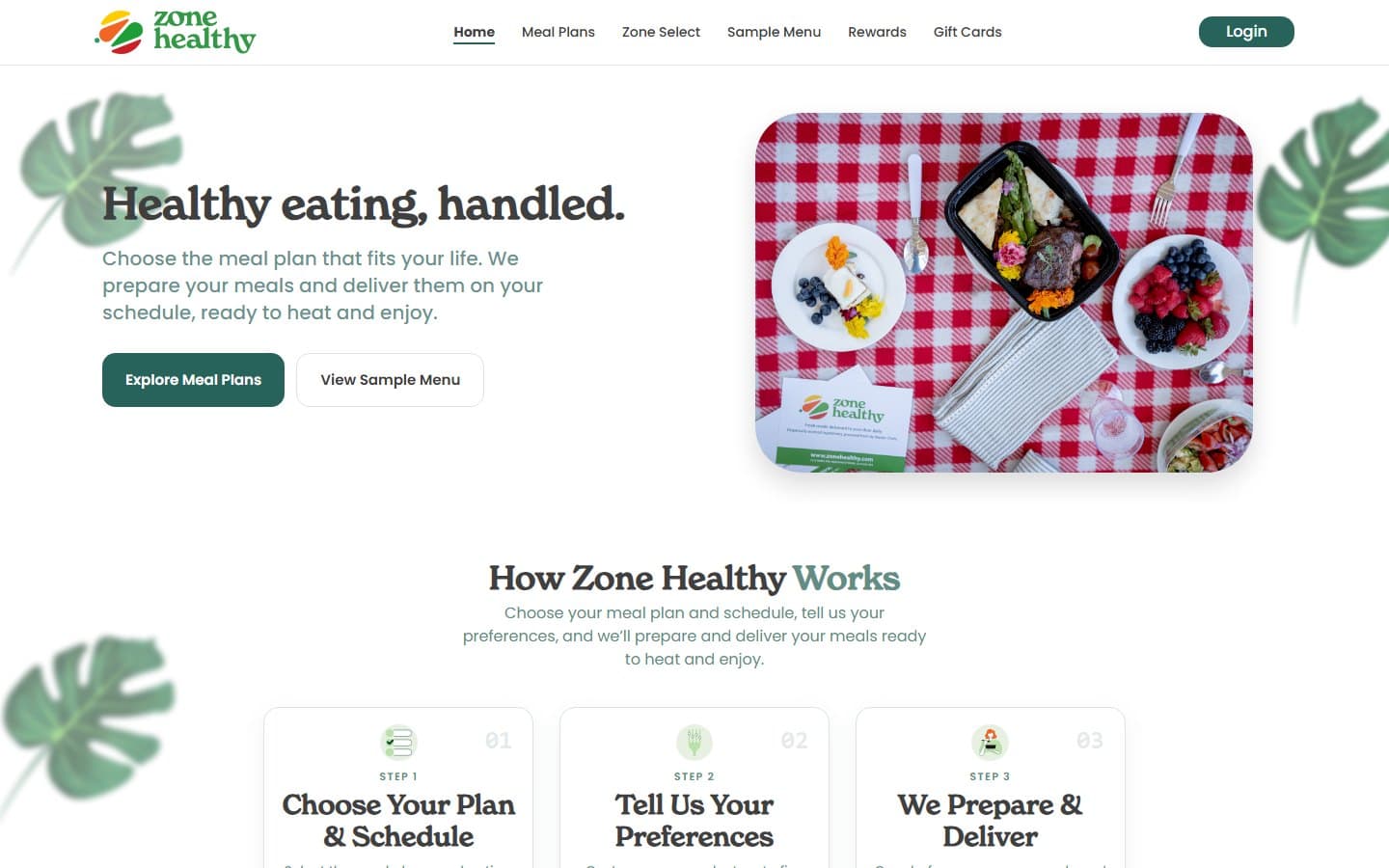
Zone Healthy: the live site
Our role
Full-stack: storefront, subscription model and the API behind it
Timeline
Ongoing engagement
Team
Lead engineer, frontend engineer

7 / 14 / 30

Day plan lengths

each priced separately

5

Ingredient exclusions

per customer, per order

1 pt / $1

Rewards programme

plus referrals

01

The problem

Four rules, one cart

Customers pick a plan length of 7, 14 or 30 days, set up to five ingredient exclusions, and can only order at all if their ZIP code is in the delivery area. On top of that sits a points-based rewards and referral programme.

Each of those is simple alone. Together they are a pricing and availability problem that has to resolve before a customer can be shown anything, and getting it wrong means quoting a price for a meal you cannot deliver or cannot make.

02

What we did

Model the subscription, then build the shop

Built on Next.js and React with a Node backend. The work started with the subscription and cart model rather than with the storefront, because the storefront is downstream of it: plan length, exclusions, delivery eligibility and reward balance all feed the same state.

That covers checkout and the account area where customers manage their preferences and track orders, which is where a subscription product actually lives after the first purchase.

  • 7, 14 and 30-day plan lengths as first-class pricing inputs
  • Up to five per-customer ingredient exclusions applied to the menu
  • ZIP-code delivery eligibility checked before anything is quoted
  • Points-based rewards and referrals feeding the same cart state
  • Account area for preferences and order tracking
03

The outcome

One cart that knows all four rules

Plan length, exclusions, delivery area and rewards resolve into a single cart and subscription state, and customers manage their own preferences from the account area afterwards.

What it is built on

Frontend

  • Next.js
  • React
  • TypeScript
  • Tailwind CSS

Backend

  • Node.js
  • Express
  • PostgreSQL
  • Prisma
  • Redis

Commerce

  • Stripe
  • Subscriptions
  • Rewards & referrals

What we learned

  • 01

    When several rules interact, model the state before building the interface. A storefront built first will encode the rules by accident, in the wrong place, several times.

  • 02

    Check deliverability before you quote. Showing an unavailable price is a worse experience than one extra question.

Next step

Tell us what you are trying to build.

Thirty minutes with the engineer who would lead the project. You will leave with an opinion on what to build, what to skip, and roughly what it costs, whether or not you hire us.

2 build slots open · Next start: early next month

What happens next

  1. 1You send a few lines about the product and the deadline
  2. 2We reply within one working day with times
  3. 3A 30-minute call, no deck, no sales script
  4. 4A written summary and a ballpark range within 48 hours